rosendals trädgård
Ansvarig arkitekt: Johnny andersson
handläggande arkitekt: Peter banks
byggnadsingenjör: Nils hildebrand

ARCHITECTURE IN CONTEXT
Our design for Rosendal is rooted in the historical grid structures of Rosendalsterrassen and Rosendals Trädgårdar. The spatial relationship to Rosendal Palace and the garden’s original purpose is brought to the forefront.
Buildings with cultural heritage value are preserved and their historic functions reinforced. New architecture replaces outdated structures and is designed with a contemporary expression, adding a new cultural layer to the rich spatial fabric of the gardens and its built environment.
The buildings are more than functional—they are designed to inspire interaction between visitors and the diverse activities of the site. The aim is to create long-term sustainable environments that embrace the full spectrum of sustainability: ecological, economic, and social. Good architecture contributes to identity, pride, and purpose—anchored in the wider context.

FLOW & PUBLIC REALM
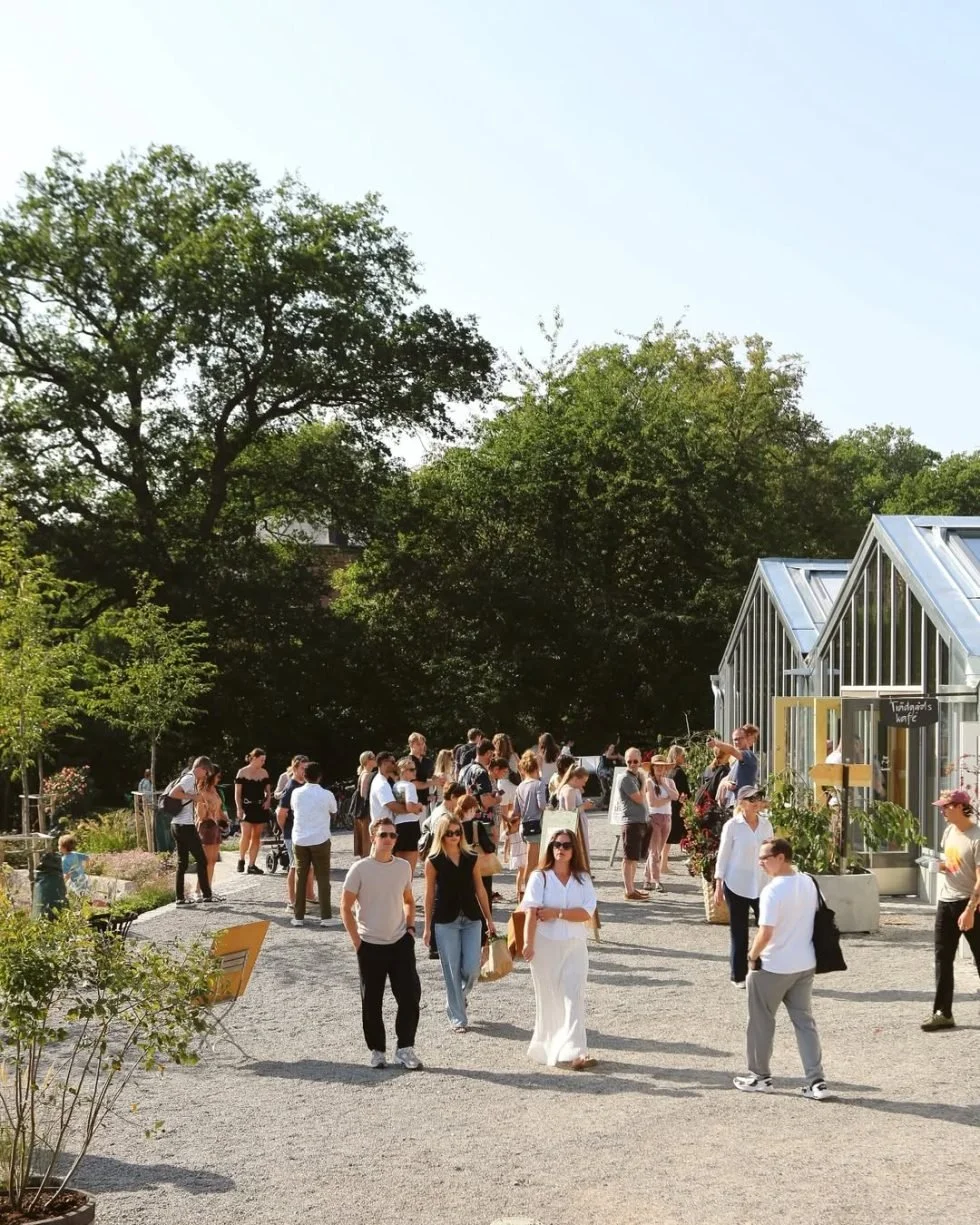
Rosendals Trädgård is one of the most visited destinations in the area, currently home to a nursery, wood-fired bakery, shop, café, and playground. It includes vegetable fields, greenhouses, fruit orchards, a vineyard, rose garden, borders, and compost systems.
With a new pedestrian and cycle bridge planned across Djurgårdsbrunnsviken, Rosendal will become more accessible and placed at the heart of a vibrant cluster of public destinations. Improved public transport connections and a redefined eastern entrance will strengthen arrival experiences. A new plaza and dedicated logistics area are introduced to meet future needs.
MOVEMENT & SEQUENCE
New movement patterns emphasize the garden’s social and educational character. The architecture encourages spontaneous meetings between guests and the skilled practitioners—farmers, bakers, chefs, and gardeners—that define Rosendal’s identity.
Experiences of rhythm and flow—sightlines, loops, transparency, and moments of enclosure—are carefully composed to let visitors feel the interconnectedness between buildings, landscape, and craftsmanship.
The eastern zone has been reorganized: old temporary structures are replaced with new public spaces, a welcoming entry garden, and a vibrant seasonal market street. These elements lead to a new central courtyard under the majestic oaks, framed by the new Knowledge Hall—a hub for learning, gathering, and exchange.
A new entrance sequence brings visitors to the existing greenhouses, where the new Kitchen & Garden Café forms a link between cultivation and cuisine—connecting Rosendal’s circular philosophy from soil to table.

CO-DESIGN & CRAFT
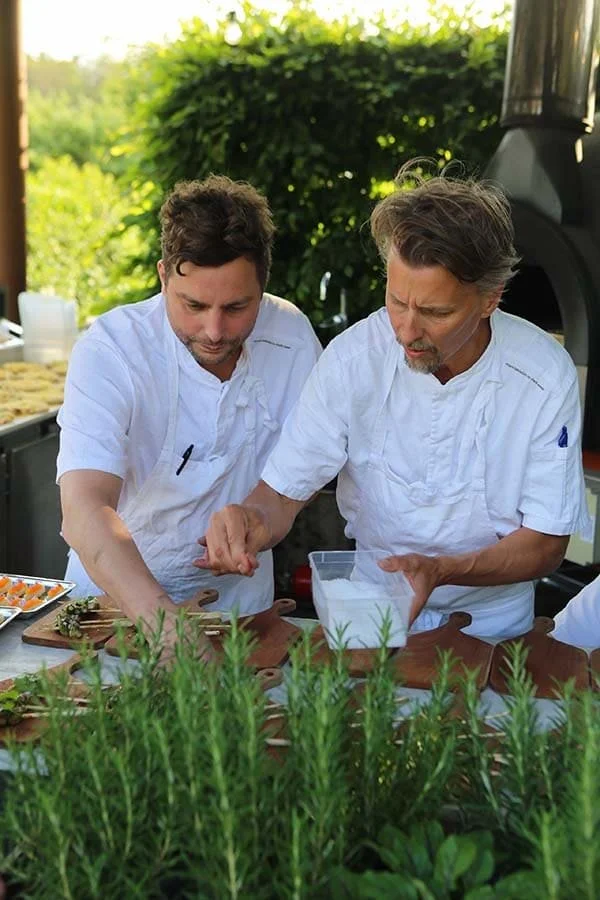
Our design journey began by immersing ourselves in Rosendal—working alongside gardeners, farmers, bakers, chefs—to understand the deeper values and daily rhythms of the place.
Through shared dialogue and hands-on practice, we shaped the essence of this project. Architecture is never created in isolation—it’s always the result of many hands, heads, and hearts working together.
KITCHEN & GARDEN CAFÉ
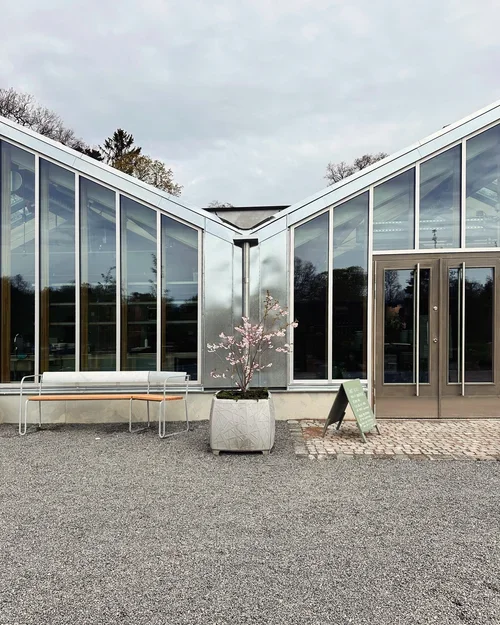
The new café and kitchen buildings form a contemporary addition, directly linked to the existing greenhouses. These buildings reflect and contrast with their surroundings—monochrome volumes clad in a durable zinc shell that protects the structure like a weathered skin.
With 80% of the volume being roof, the choice of Galfan (zinc-aluminium alloy) offers exceptional weather protection and longevity. Inside, a warm wooden structure of locally sourced pine from Djurgården is complemented by reclaimed brick flooring.
This is architecture that is both humble and strong—grounded in use, shaped by place, and made to last.