osprey farm studio
Life as a Cycle, Not a Line
Osprey Farm Studio nominated for the Kasper Salin Prize 2025
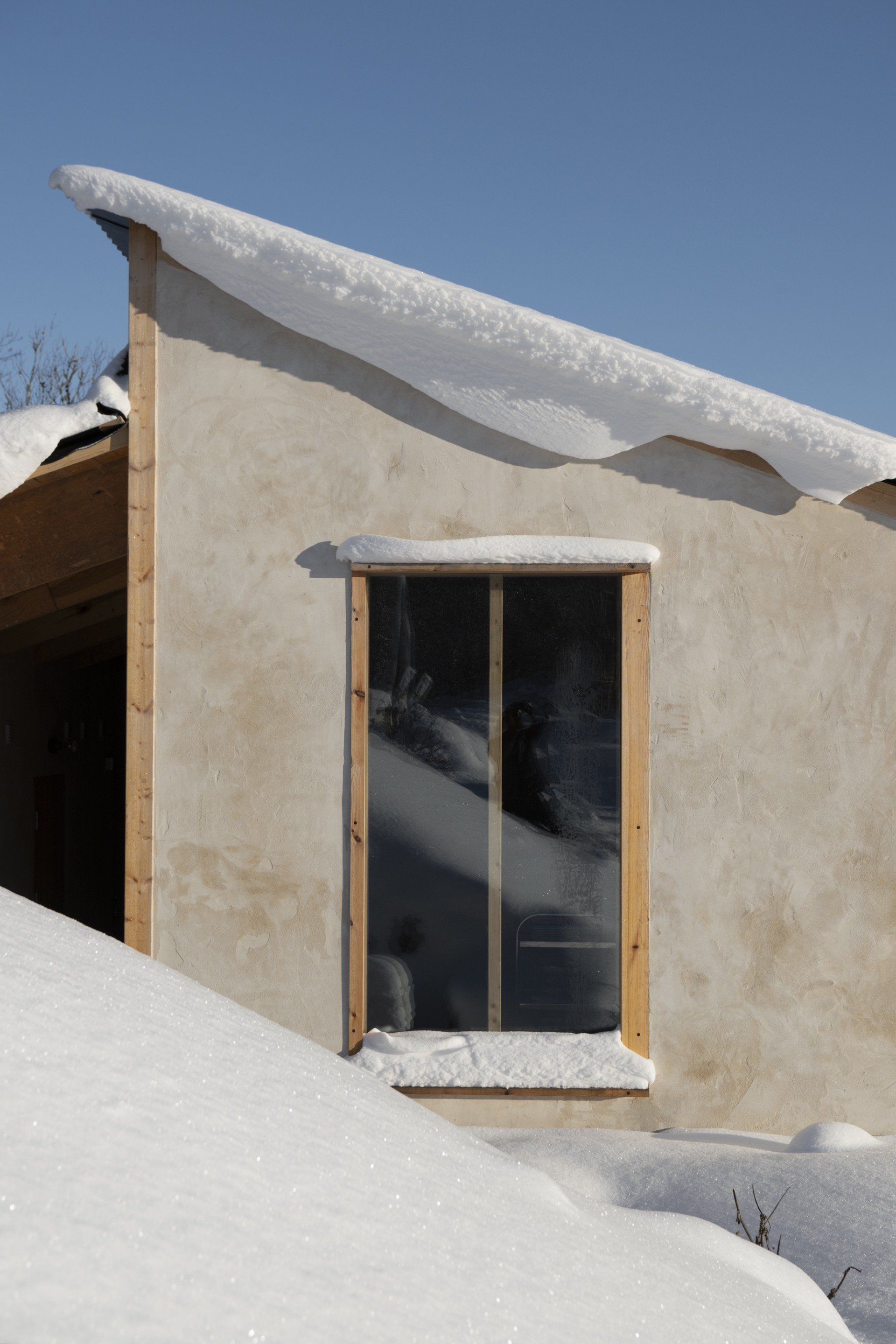
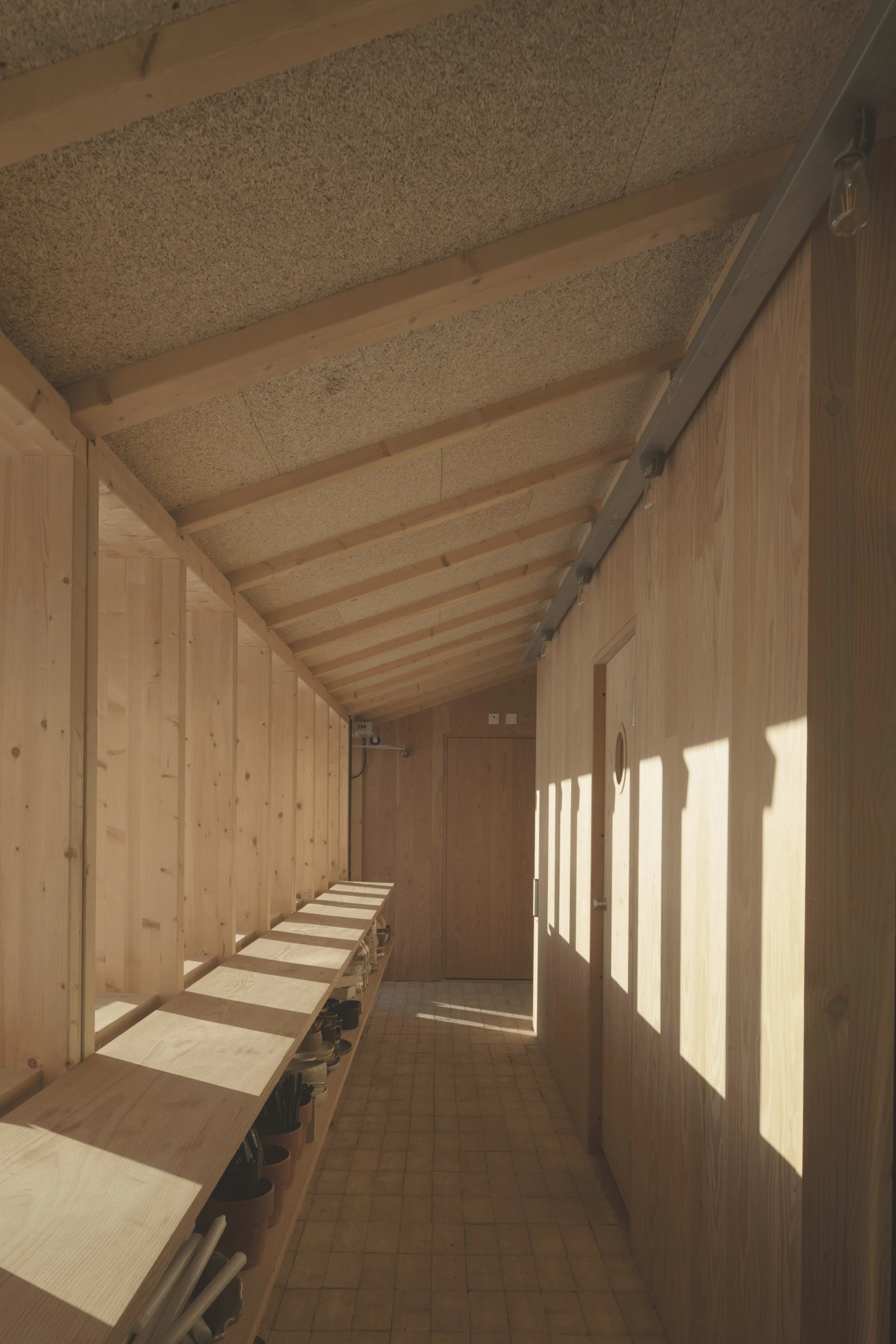
Osprey Farm Studio, designed by Jordens Arkitekter through Johnny Andersson has been nominated for the 2025 Kasper Salin Prize by Sveriges Arkitekter.
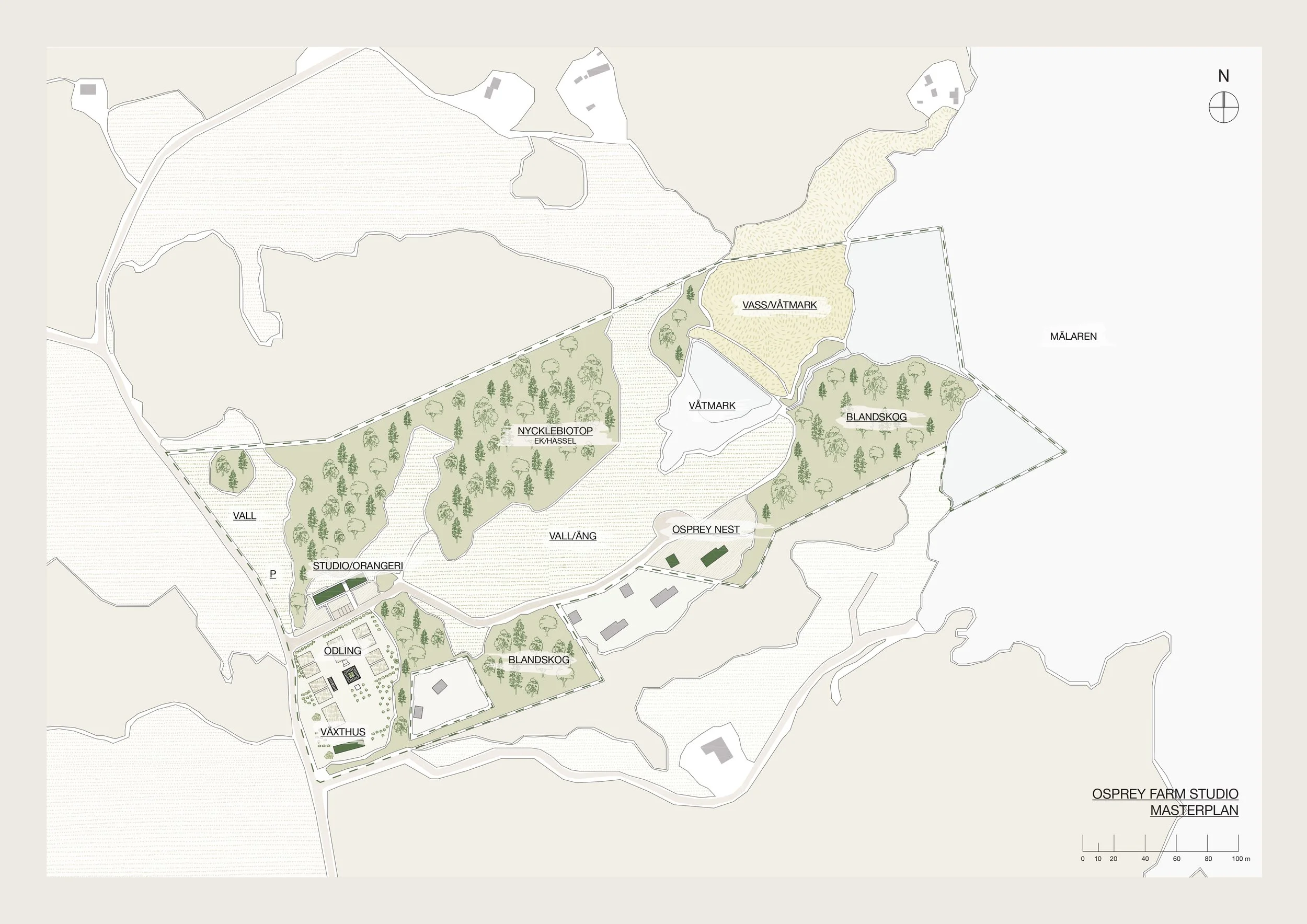
An essay is an attempt, a way of testing a thought against reality without knowing exactly where it will arrive. Osprey Farm Studio has grown in that way. When we came here there was no finished plan, only clay soil under our boots, open meadows, old oaks, and the shoreline of Lake Mälaren. We wanted to understand the fabric of the place. Together with ecologists and biologists we surveyed the landscape: the old oaks that carry centuries of life, the fields long under cultivation, the reeds, the water, the insects and animal life. Actively mapping what was already here created respect and changed how we approached the project. It became a method we have carried forward ever since.
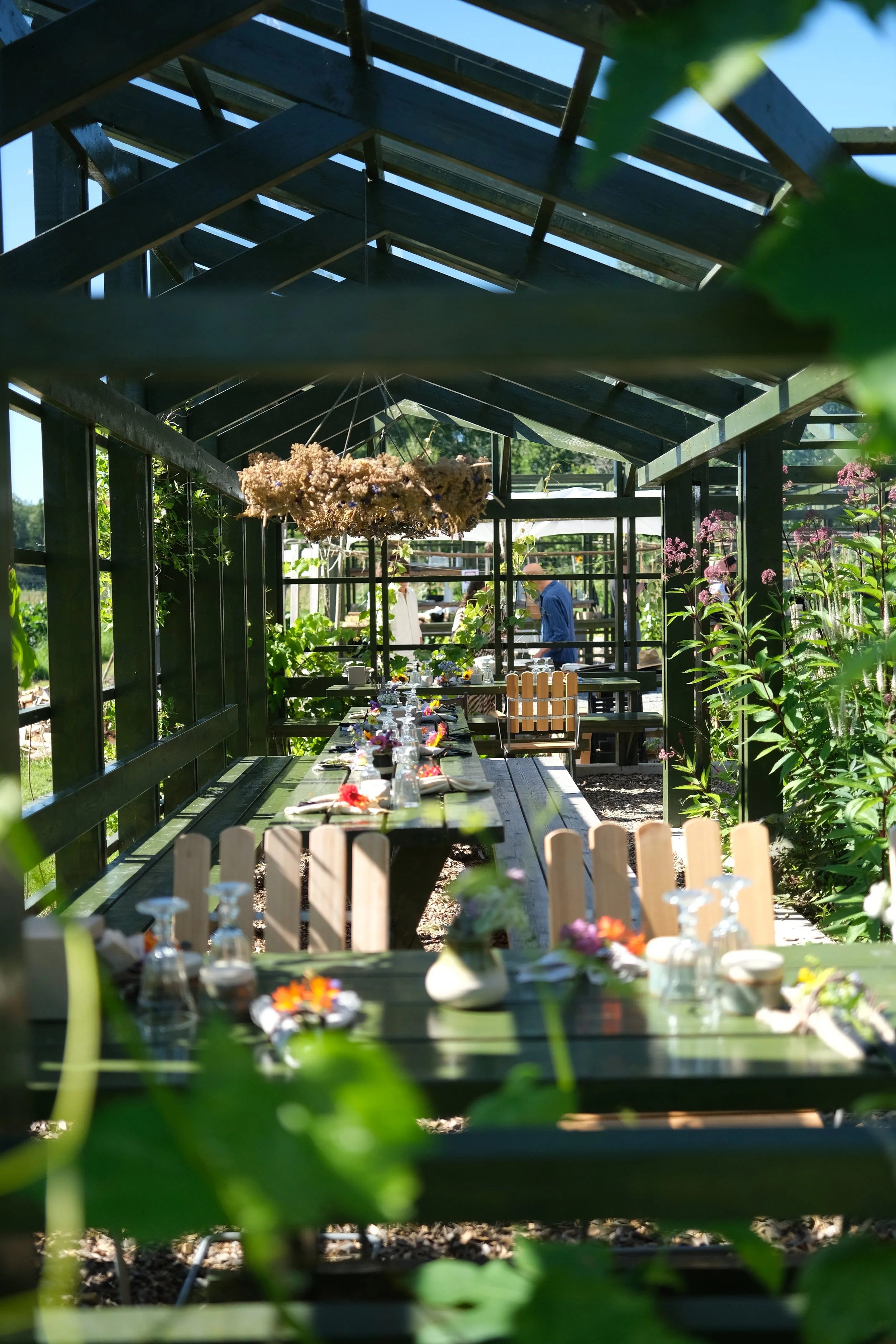
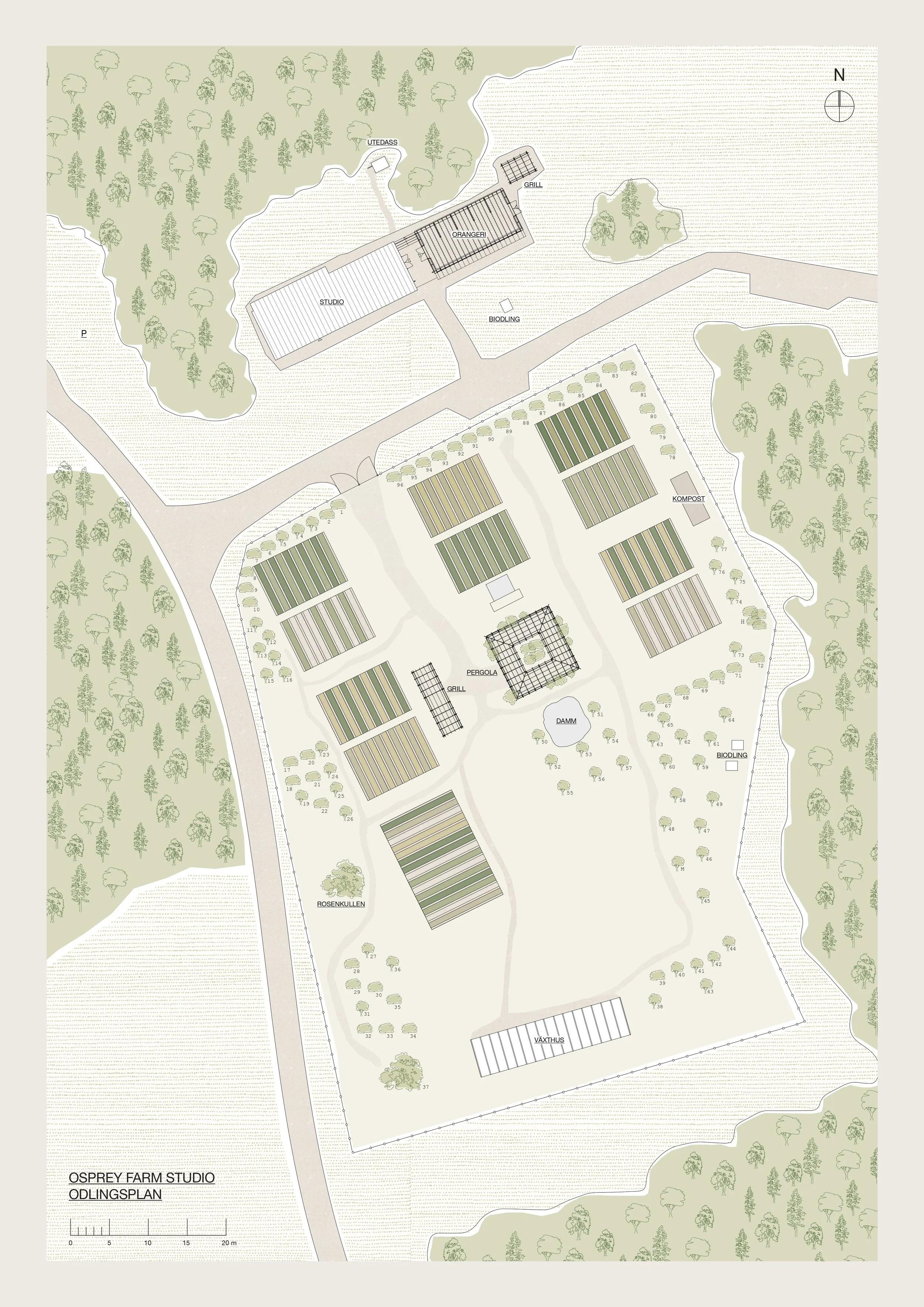
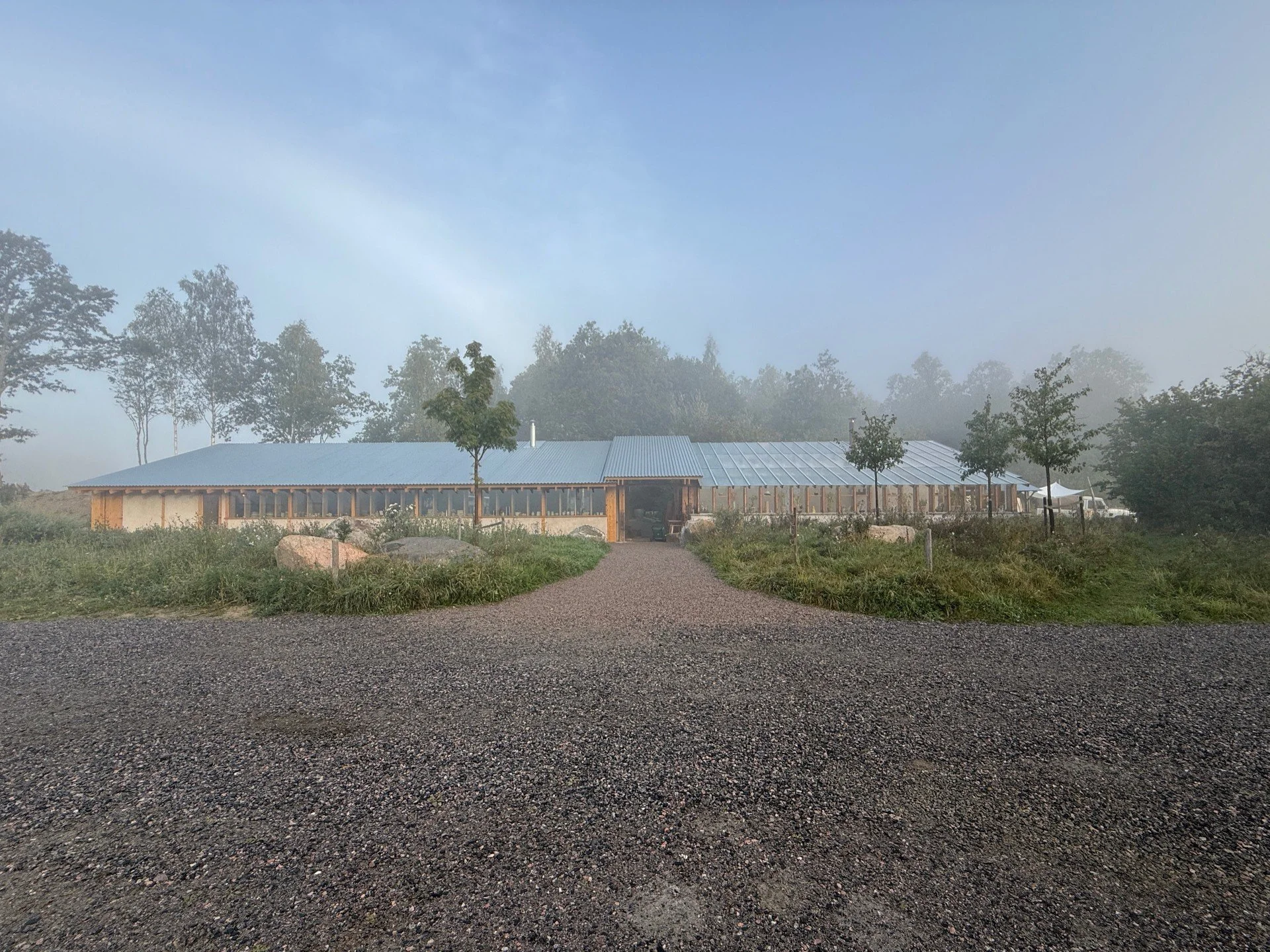
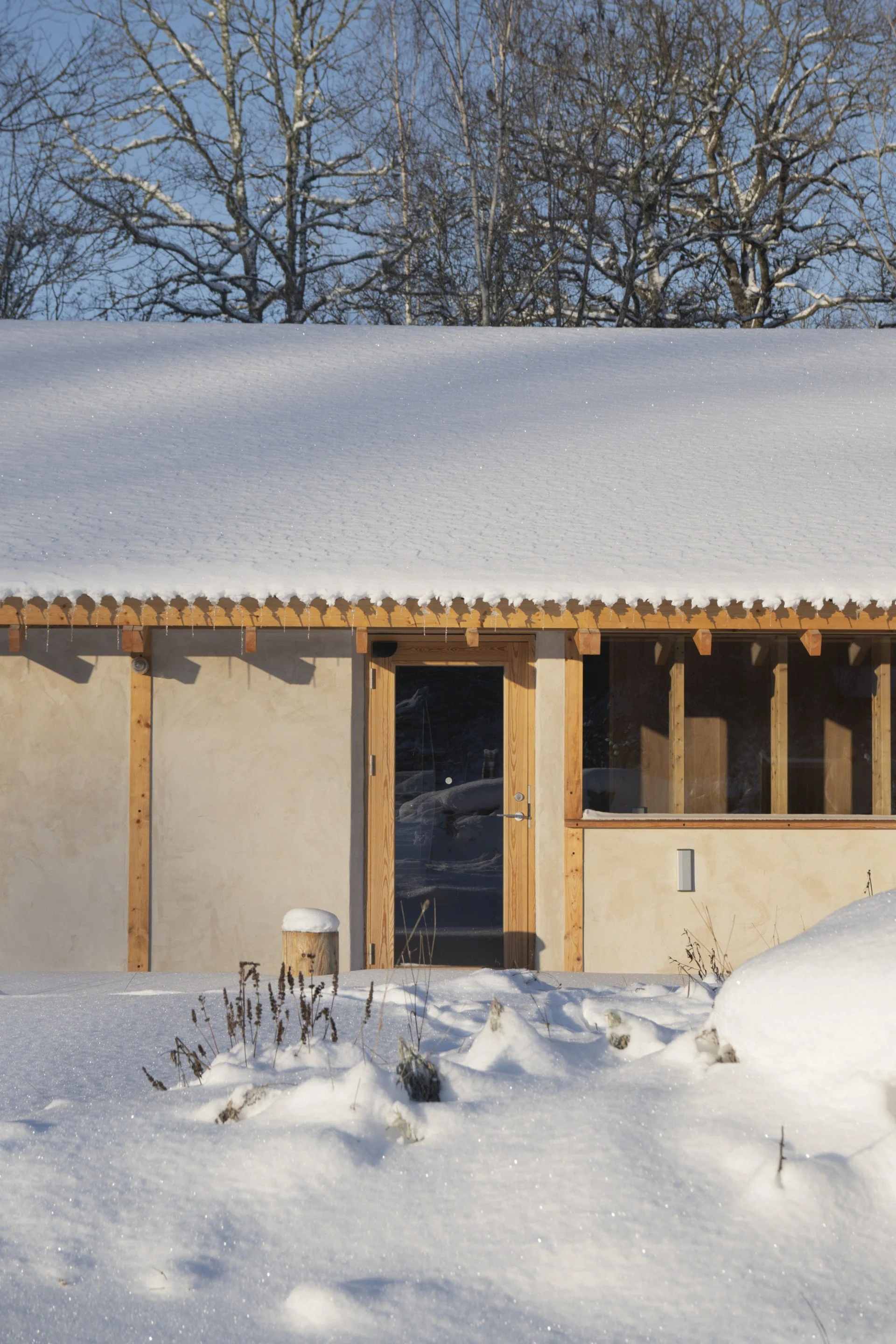
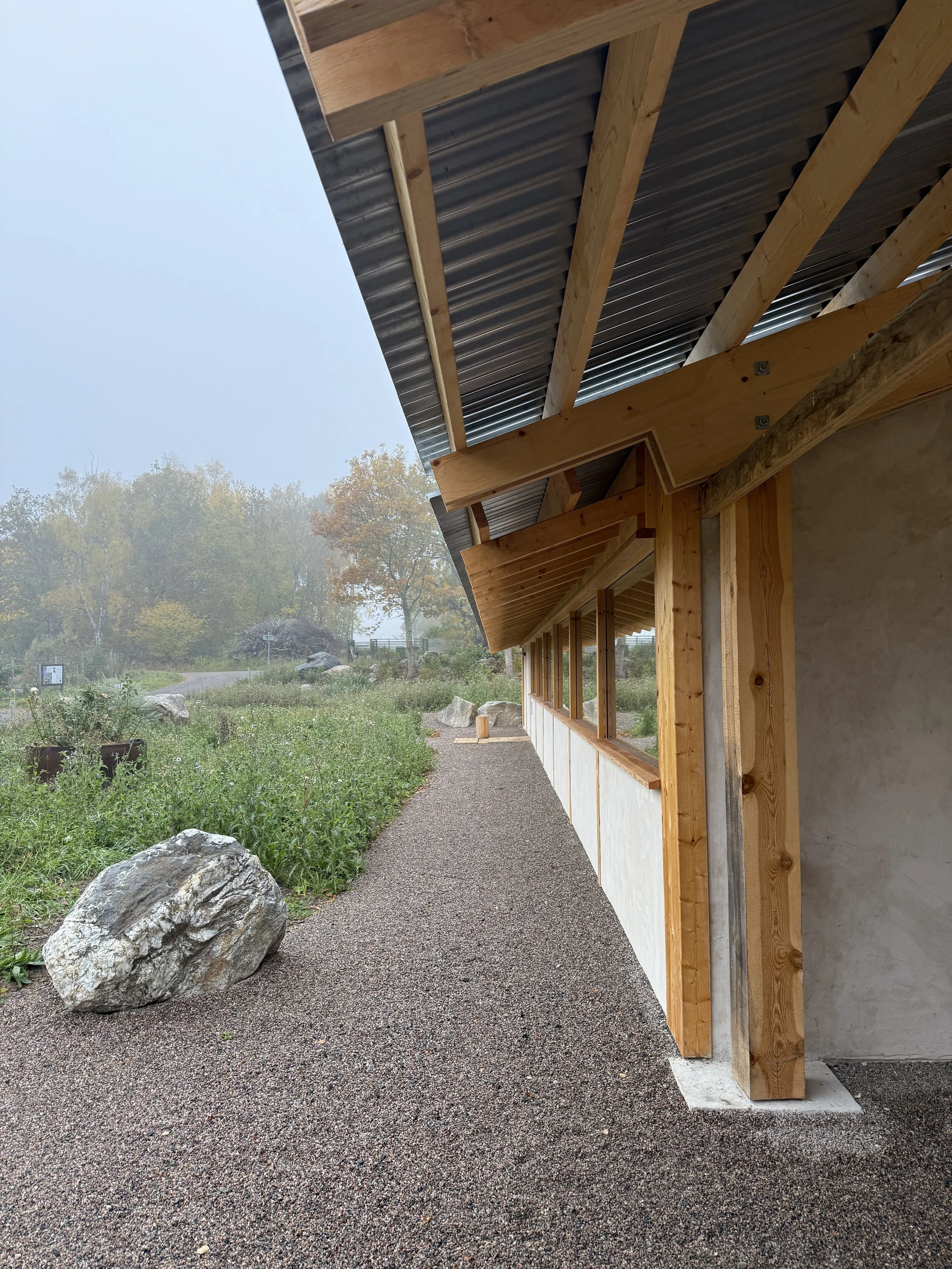
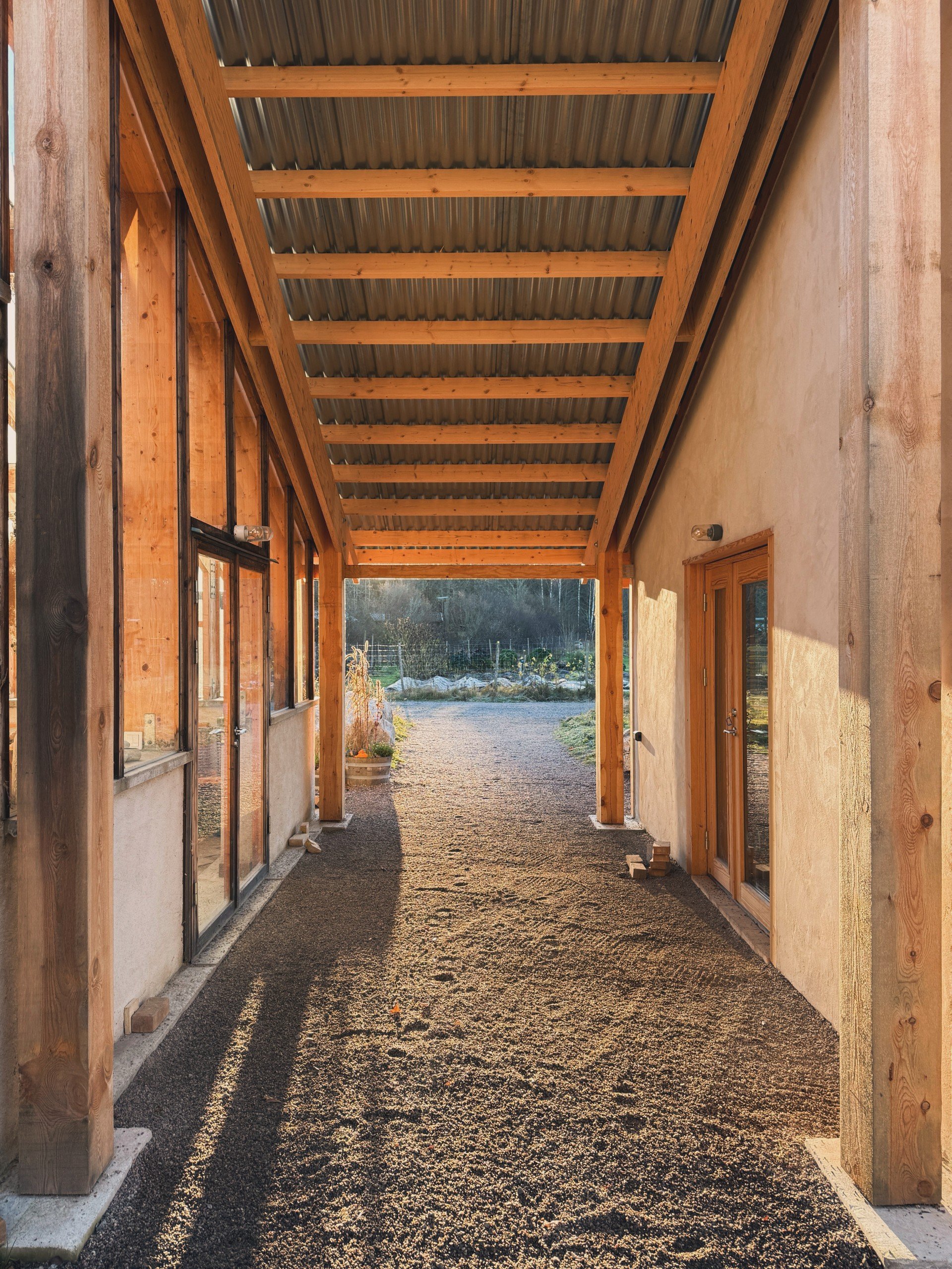
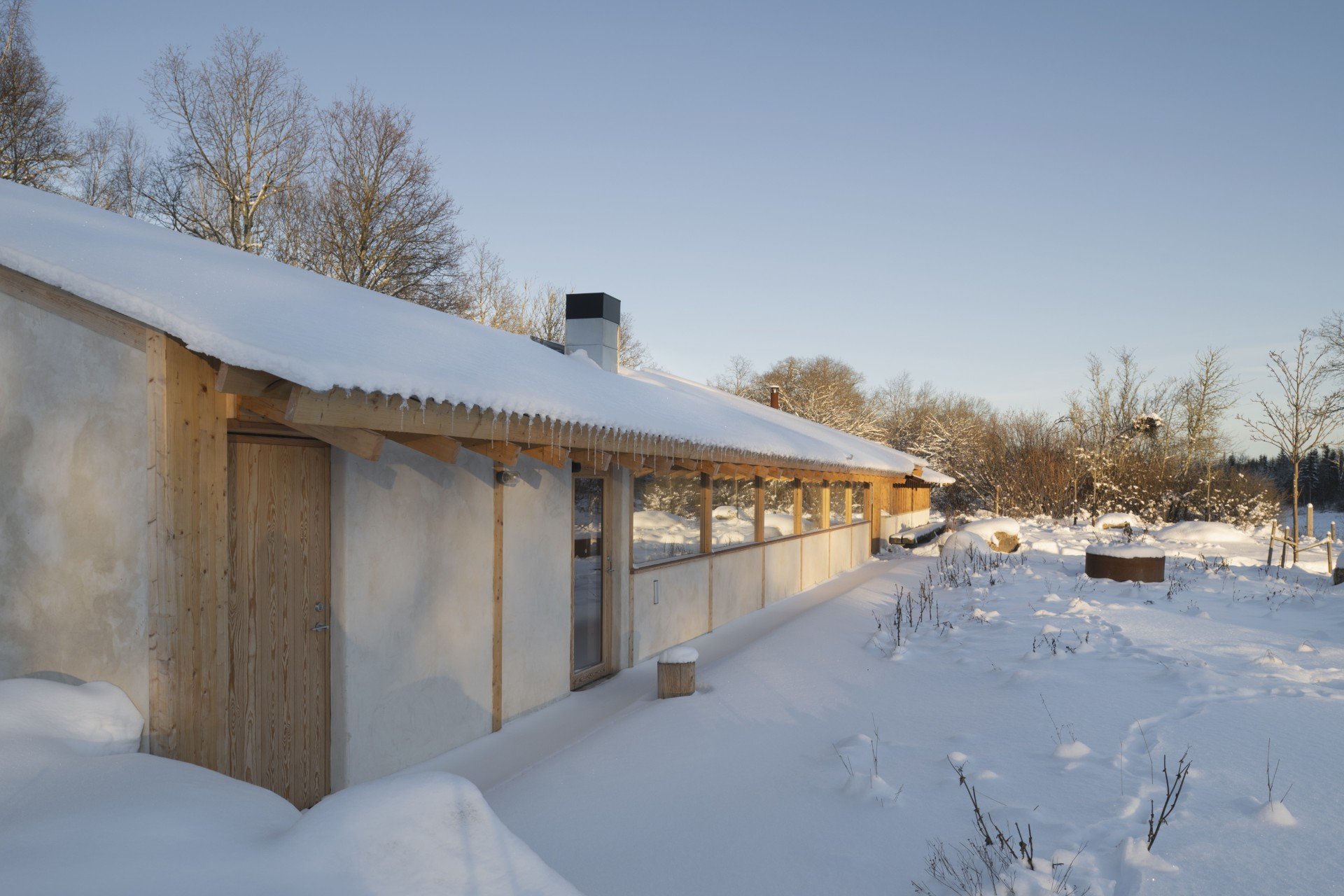
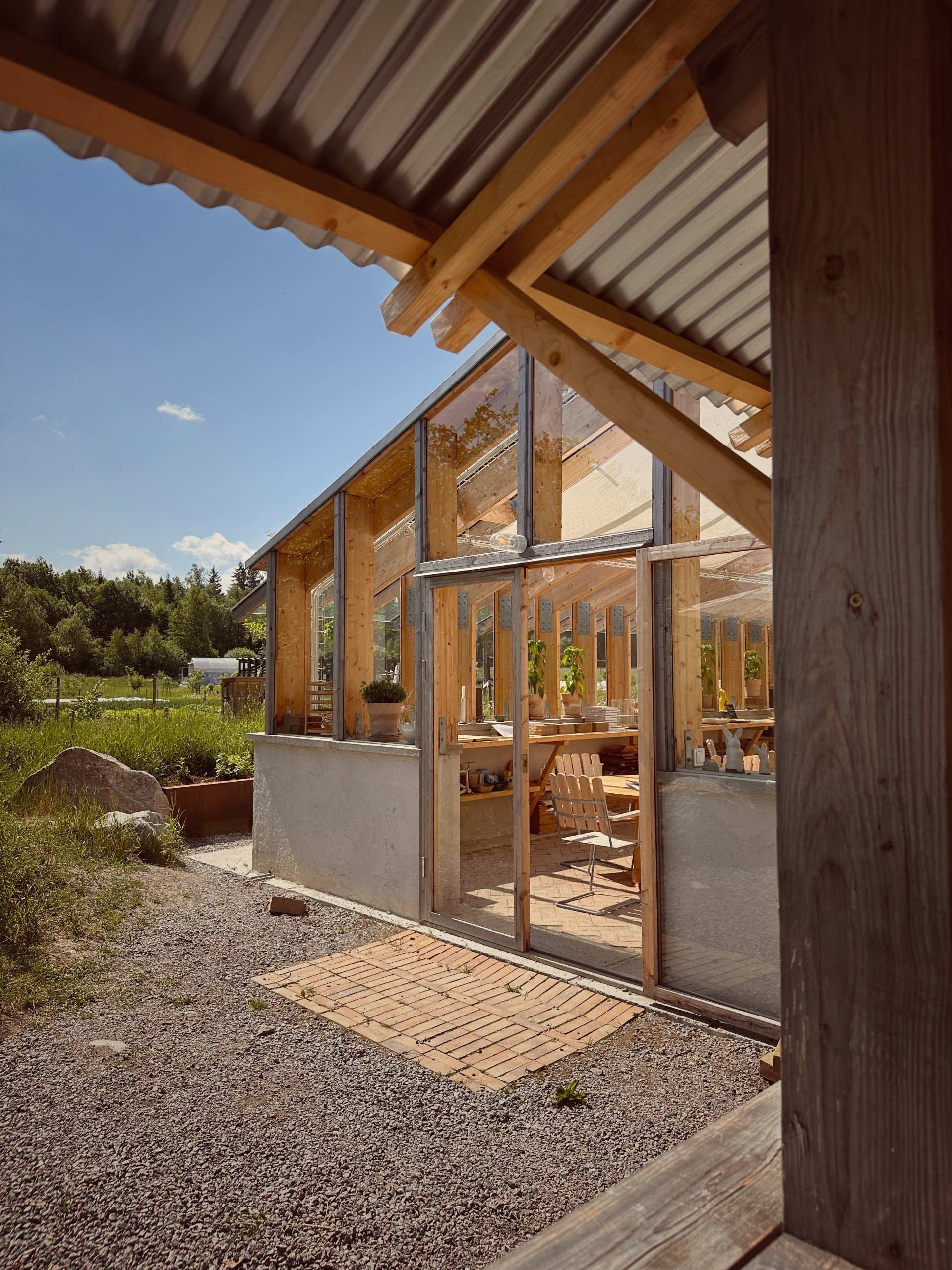
The architecture grew from the same logic as the cultivation and the surrounding life. The studio, the passage structure, and the orangery are restrained in expression and held together by generous roofs that give the ensemble a horizontal gravity. They are not experienced as separate buildings but as parts of a continuous garden room. One moves between them without clear boundaries. Passing through the timber passage, the body slows, movement gathers, and the courtyard opens.
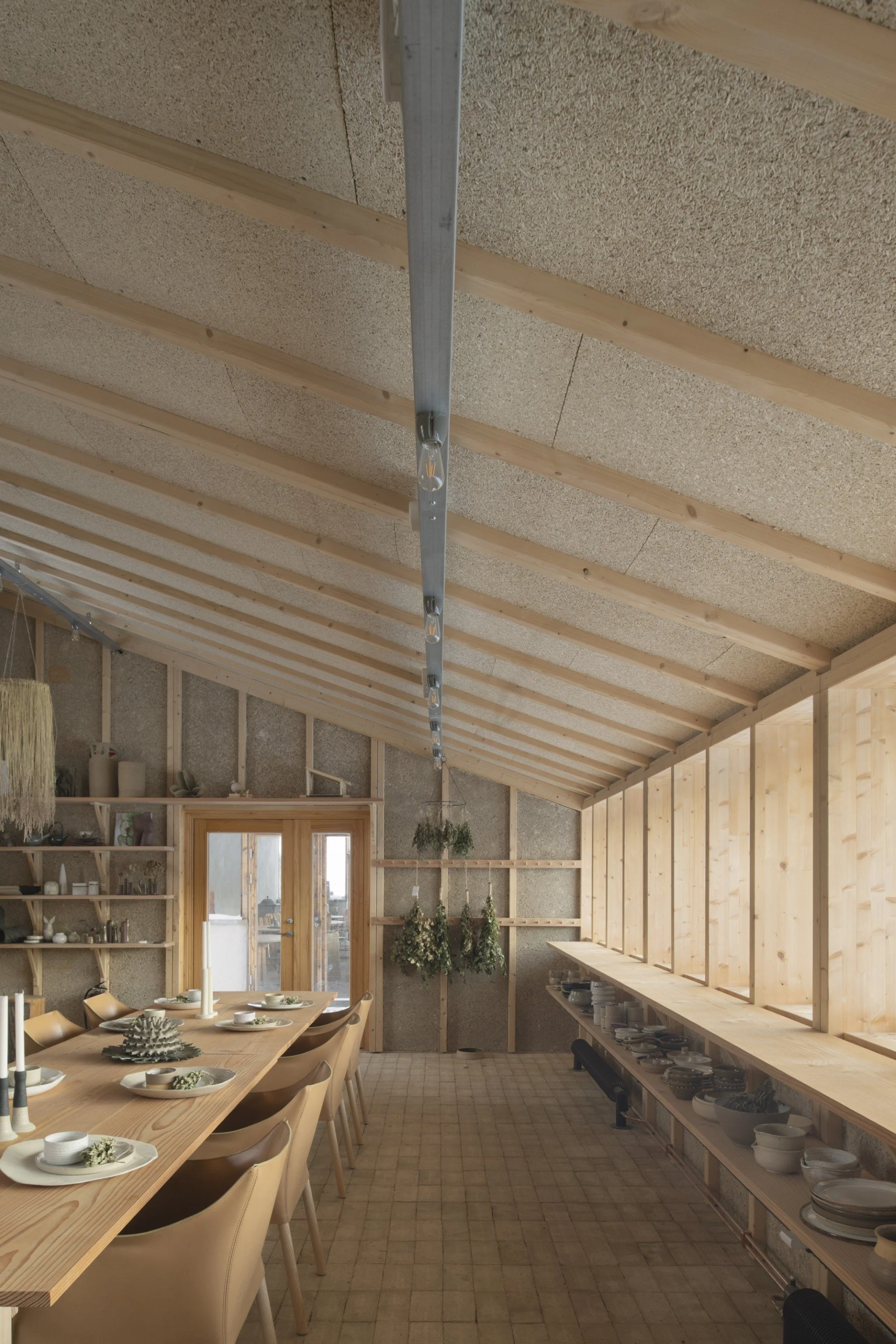
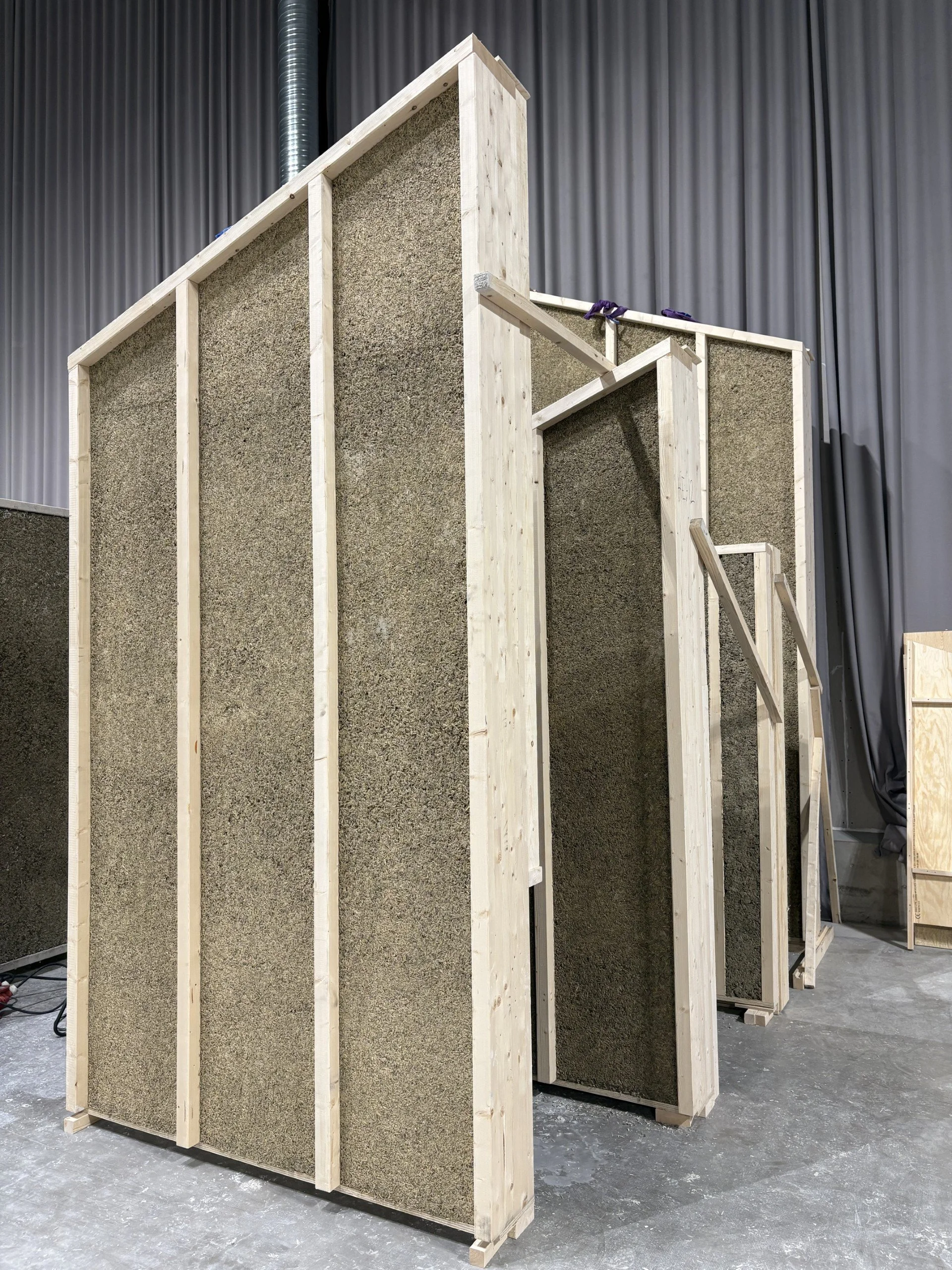
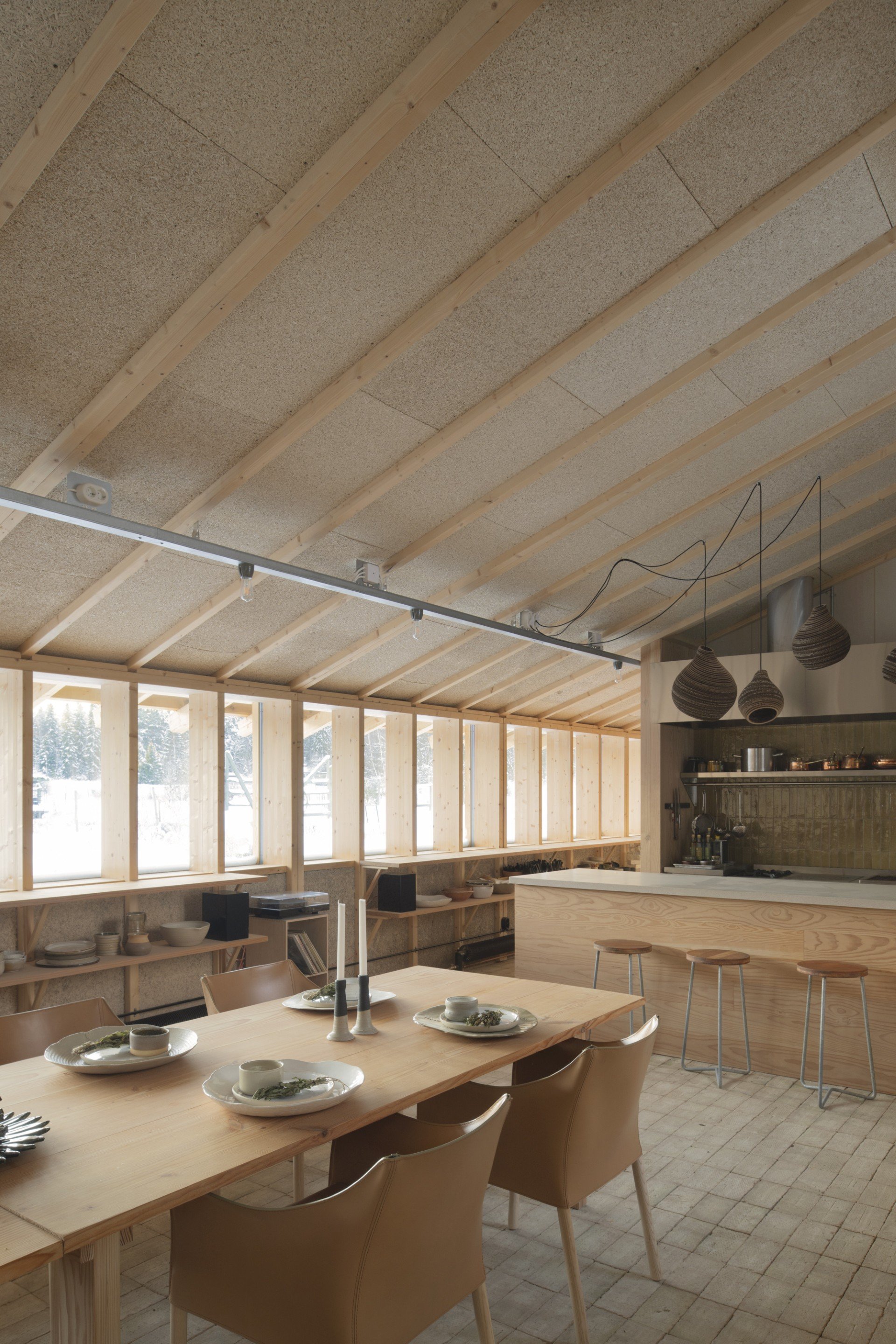
The studio is the primary volume, solid and anchored in the ground. The foundation of recycled foam glass, the glulam frame, and the hemp-lime walls grown in Sweden give the building stability and longevity. The construction is direct and carefully articulated. The orangery is lighter and more open, formed by a more slender timber structure and glass that admits light from several directions. Here the climate and the changing seasons are clearly felt and shape how the space is used.
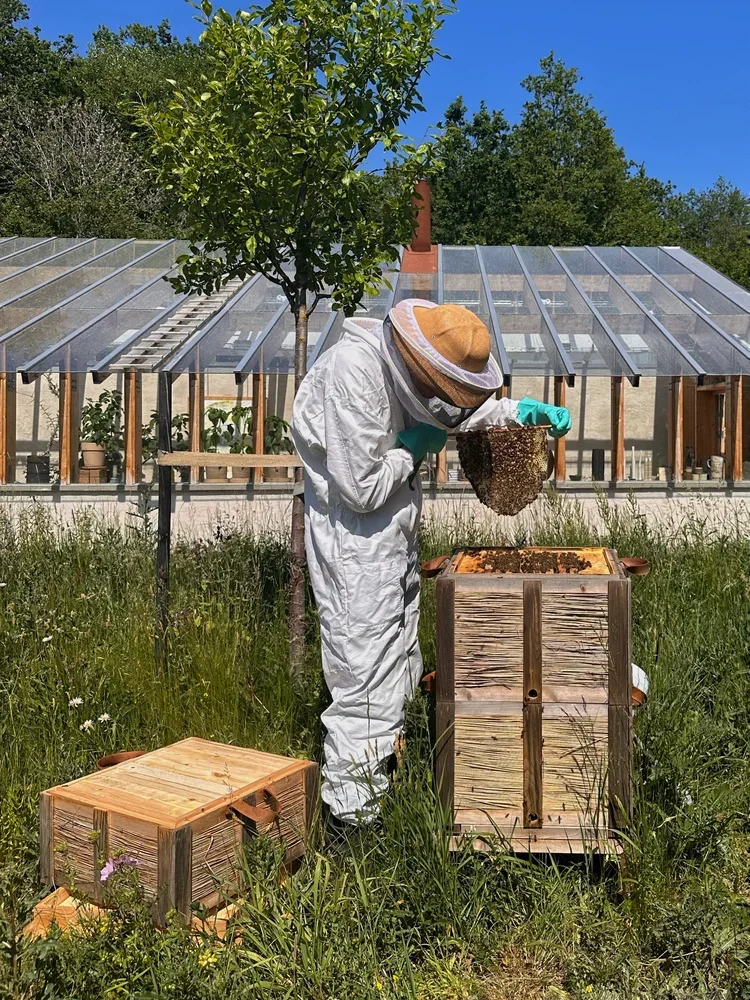
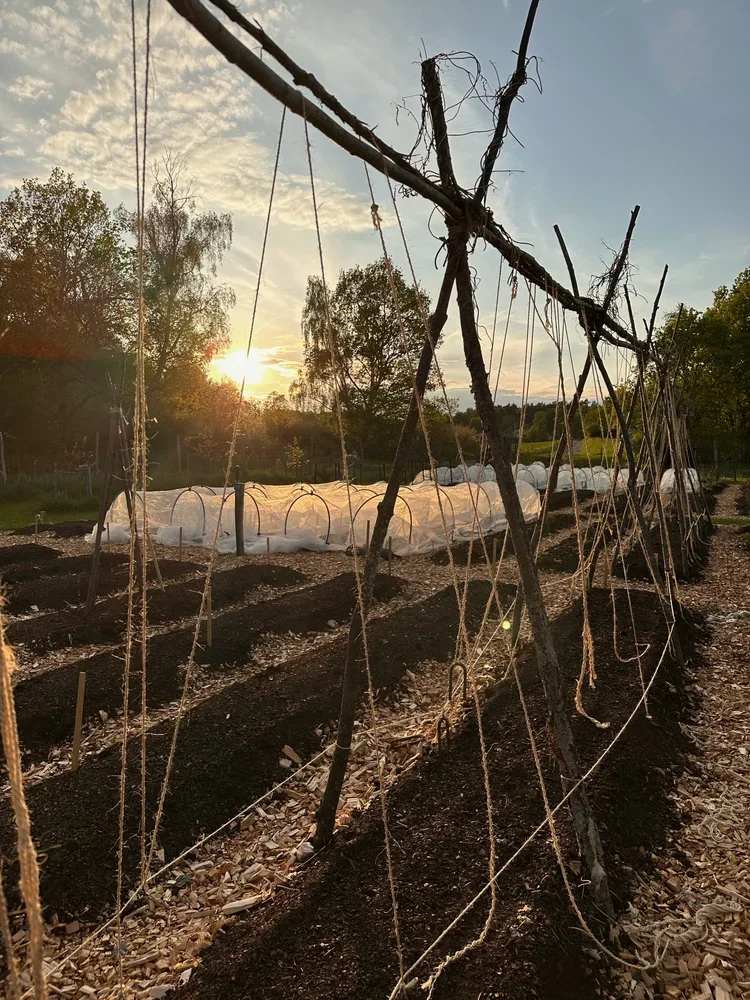
The garden does not surround the buildings; it flows through them. Flower fields, cultivated beds, hundreds of fruit trees and berry bushes, greenhouses, compost, ponds, and moving water unfold within the same spatial continuum. Floors, gravel, vegetation, and roofs interlock so that architecture and cultivation are experienced as one structure.
Around this, our ten hectares extend across meadow, woodland, and wetland, and here stands our home. The residential buildings form part of the forest edge and the slope, reflecting an understanding of the inherent qualities of the landscape. They settle into the terrain rather than sit upon it. Living here is part of the project. The ambition is clear: to give back more than we take.
Paradise has often been described as an enclosed garden, a protected oasis set apart from the world. The place in which we work is open, cultivated, and in constant change. In a time of climate crisis, social inequality, and threatened biodiversity, the entire planet becomes a garden in need of care. The garden becomes a metaphor for how we might rethink our relationship to the earth, in nature, in society, and in culture. Art, architecture, music, and literature are expressions of the same movement: the cultivation of meaning. Material preparedness is about survival. Cultural preparedness is about will. And will grows where something is made with care.
Osprey Farm Studio is an ongoing attempt.
With gratitude,
Johnny Andersson
Vision
Osprey Farm Studio has taught us to think in cycles rather than straight lines.
We follow the rhythm of nature — from seed to harvest, from experiment to insight. We’ve learned that you don’t need all the answers at the start — direction emerges through process, through creation itself.
We aim to create a place that reminds us: life is not a line toward a goal, but a cycle of learning, reuse, and growth.
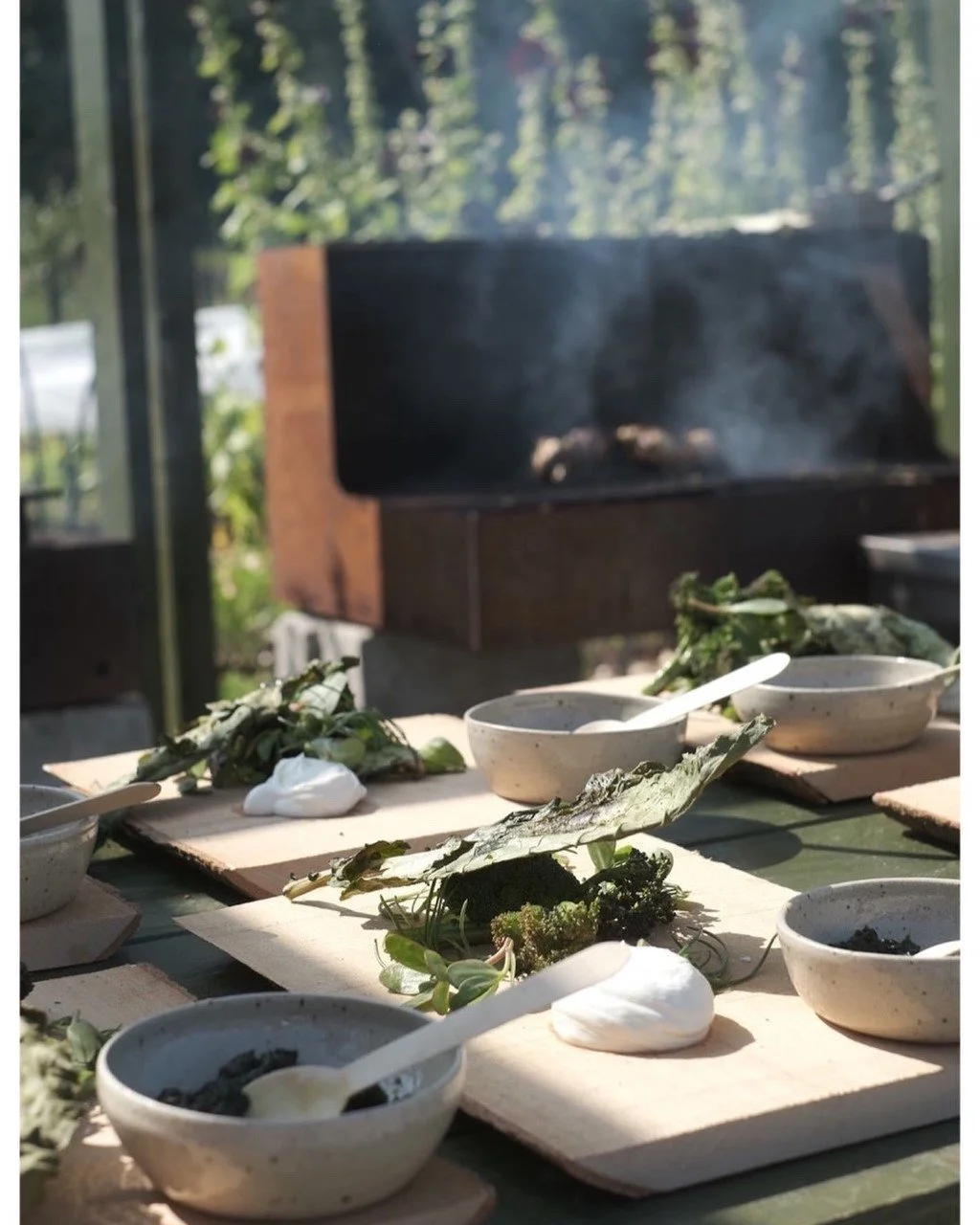
A place where soil meets thought, hand meets idea, art meets cultivation. A space to experience, create, and understand the relationship between humans and nature.
Mission
To build a meaningful and inspiring place that unites the concrete and the abstract — where architecture, craftsmanship, food, and farming grow together.
A place where everyone who participates contributes to a greater whole. We believe in doing over theorizing: from word to soil to action. No one can do everything, but everyone can do a little more than yesterday.

Society & Perspective
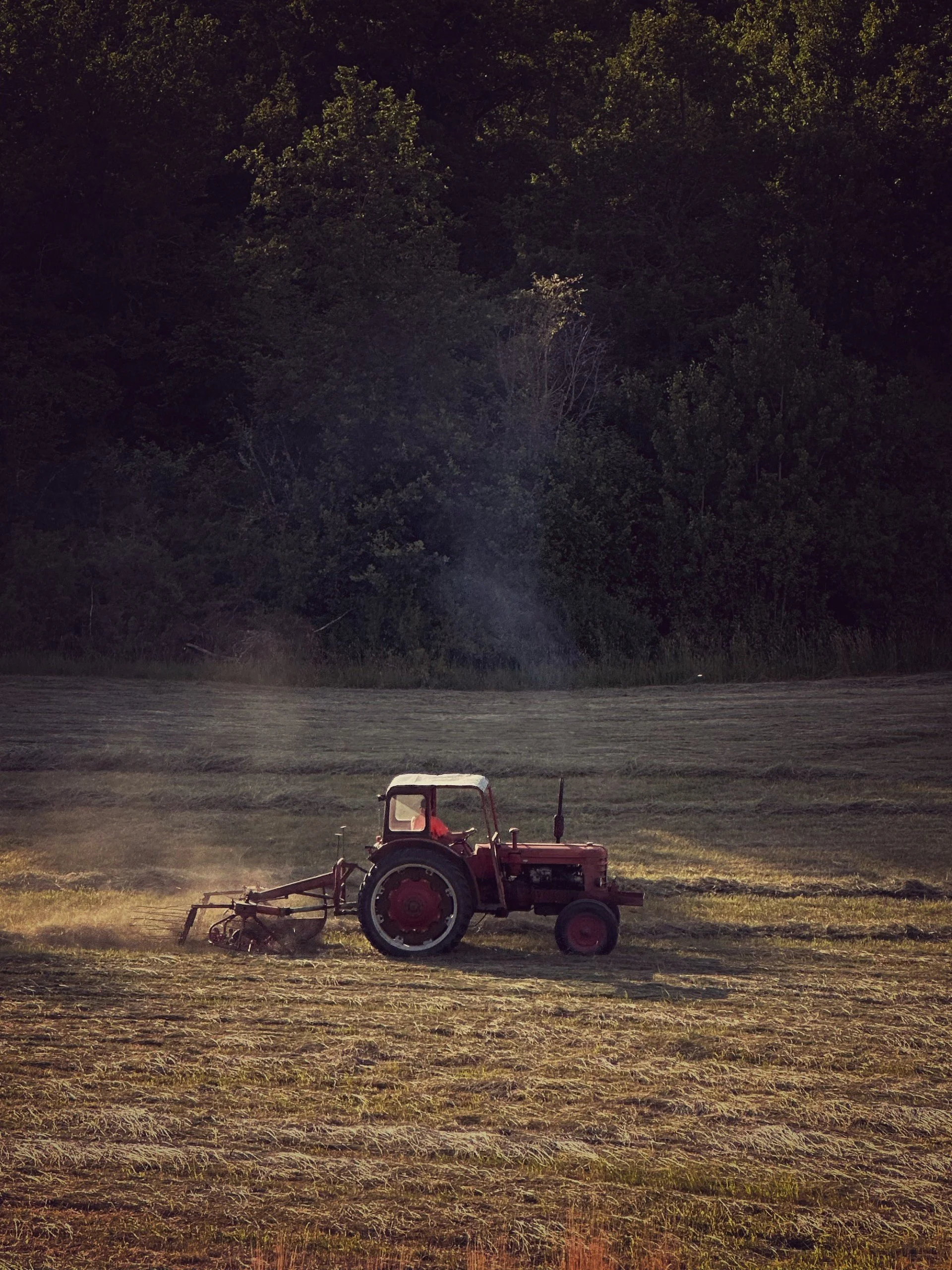
The countryside is not just a place — it’s a foundation. For our food, our future, our communities. Yet today’s systems rarely support the small-scale or the sustainable.
We want to show that small initiatives can become powerful models for a different future — one where the rural is vital, thriving, and central.
Where small-scale farmers, makers, and designers become pillars of a more resilient society.
Cultivate your garden. Live, and let live